Difference between revisions of "Fuel Prices China, P.R."
***** (***** | *****) m (1 revision) |
***** (***** | *****) m (Protected "Fuel Prices China, P.R." ([edit=sysop] (indefinite) [move=sysop] (indefinite)) [cascading]) |
Revision as of 10:36, 4 December 2012
Part of: GIZ International Fuel Price database
Also see: China Energy Situation
Fuel Pricing Policies
| Local Currency: | CNY |
| Exchange Rate: | 6.63
|
| Last Update: | 2011/05/01 |
The government regulates fuel prices and controls the downstream sector in China. The „National Development and Reform Commission“ (NDRC) supervises the pricing of fuels. Fuel prices are published on the websites of regional and municipal commissions, e.g. the „Beijing Municipal Commission of Development and Reform“ (http://www.bjpc.gov.cn/).
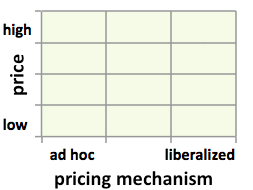
In 2008, a new pricing mechanism has been introduced. The price of crude oil plus cost is taken as principal of the new mechanism. The new pricing system is based on oil price of Brent, Dubai and Minas as basic average value, plus cost of refinery and adaptable profit, plus domestic tax as well as fees of fuel transportation etc., the sum becomes the reference selling price. Price changes are permissible if crude oil prices have changed more than 4 % within 22 days. However, the pricing does not always follow this formula. In particular, the government avoids steep price increases to maintain „reasonable“ prices, especially for farmers. This policy results in substantial under-recovery of costs of Chinese refineries with some reports about shortages and hoarding.
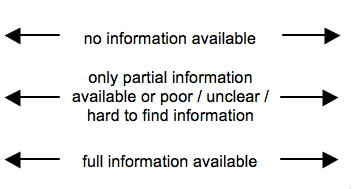
Comprehensive official information on fuel price statistics and fuel price composition is missing.
Fuel Prices and Trends
| Gasoline 95 Octane | Diesel | |
|---|---|---|
| in USD* |
|
|
| in Local Currency |
|
|
* benchmark lines: green=US price; grey=price in Spain; red=price of Crude Oil
Fuel Price Composition
Price composition.
The costs for transporting fuels from regional storages to service stations amount to maximum 1% of the wholesale price.
The retail margin equals ~4% of the wholesale price.
Information for the city of Beijing; Source: http://www.bjpc.gov.cn/.
Further information on price composition is missing, hints welcome.
At a Glance
| Regulation-Price-Matrix |
| ||||
  |

|
|
| ||
Statistics missing. Pricing formula missing. Detailed fuel price breakdown missing. Hints welcome.
Sources to the Public
| Type of Information | Web-Link / Source |
|---|---|
| Other Information | http://en.ndrc.gov.cn/ |
| Pump prices and margins | http://www.bitauto.com/youjia/beijing/ (Pump prices in Beijing) |
| Pump prices and margins | http://www.bjpc.gov.cn/syjg/syjg_ggspxxjg/200605/t119702.htm (For Beijing) |
| Wholesale Prices | http://www.bjpc.gov.cn/syjg/syjg_ggspxxjg/200605/t119702.htm |
Contact
Please find more information on GIZ International Fuel Price Database and http://www.giz.de/fuelprices
The following coordinate was not recognized: {{#geocode: China, P.R.|google }}.