Difference between revisions of "Innovation Labs"
***** (***** | *****) Tag: 2017 source edit |
***** (***** | *****) Tag: 2017 source edit |
||
| Line 48: | Line 48: | ||
<div class="grid stretch-items"> | <div class="grid stretch-items"> | ||
<div class="width-1-3 card" style="border: 3px solid #29a5a5; padding: 15px; border-radius: 8px;"> | <div class="width-1-3 card" style="border: 3px solid #29a5a5; padding: 15px; border-radius: 8px;"> | ||
| − | [[ | + | [[File:WISIONS-Reports_IL-Nepal_E-Mobility_2025.pdf|link=https://energypedia.info/images/9/93/WISIONS-Reports_IL-Nepal_E-Mobility_2025.pdf|border|center|border|400x400px|alt=]] |
</div> | </div> | ||
<div class="width-2-3 card" style="border: 3px solid #29a5a5; padding: 15px; border-radius: 8px;"> | <div class="width-2-3 card" style="border: 3px solid #29a5a5; padding: 15px; border-radius: 8px;"> | ||
Revision as of 13:06, 9 September 2026
WISIONS' Approach to Systemic Change

We have learned that a series of coherently interlinked actions through multi-stakeholder alliances is crucial for bringing about broader and deeper transformations. In order to provide such a level of coherence, WISIONS is building on the Wuppertal Institute’s Innovation Lab approach. The aim is to establish Innovation Labs that focus on rural and peri-urban energy solutions with the aim of improving local living conditions.
Innovation Labs:
- are multi-stakeholder alliances;
- focus on the development opportunities and challenges faced by rural populations in one country or region;
- mobilise resources for the co-design, practical validation, evaluation and scale-up of energy solutions that strengthen rural livelihoods;
- are composed of single but interrelated projects;
- integrate WISIONS’ knowhow from the concept stage of the individual projects.
Innovation Lab Nepal
Since 2023, the Innovation Lab has piloted decentralised renewable energy (DRE) models in Baglung and Jumla, including micro-hydro grid interconnection, electric cooking, e-mobility, and nature-based solutions for slope stabilization.
The overarching goal of the Innovation Lab Nepal is to strengthen the livelihoods of rural populations by applying decentralised renewable energy solutions in combination with sustainable landscape management practices.
To that aim, a multi-stakeholder process has been established involving local community organisations, local and national public actors, private suppliers of technology and services, and academics and researchers.
The intention is to leverage the different expertise and knowledge of these stakeholders to:
- Identify the development opportunities and challenges facing the rural communities involved
- Assess which renewable energy and landscape management solutions can effectively exploit these opportunities
- Design, implement and evaluate transformative actions that unlock the full potential of the most promising energy and landscape solutions
The lack of sustainable livelihood opportunities in rural areas of Nepal is a key factor driving the migration of young men and women to urban centres and countries overseas. We predict that the widespread use of decentralised renewable energy and sustainable landscape management in rural communities will generate employment opportunities (in SMEs both on and off farms), increase food security (from diversified agricultural activities) and enhance the resilience of the natural ecosystems of their landscapes (particularly of the Himalayan forests).
Overall, the IL Nepal aims to bring about systemic change to increase the options for people to build prosperous and fulfilling lives in rural Nepal, whilst also helping to address global sustainability challenges.
Reports
Understanding the Diffusion of E-cooking Solutions for Micro Enterprises in Rural Nepal
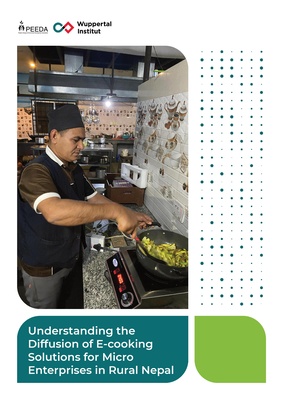
Understanding the Diffusion of E-cooking Solutions for Micro Enterprises in Rural Nepal
This report ....
Pre-Feasibility Study on Electric Mobility in the Galkot-Badigad-Nisi Corridor
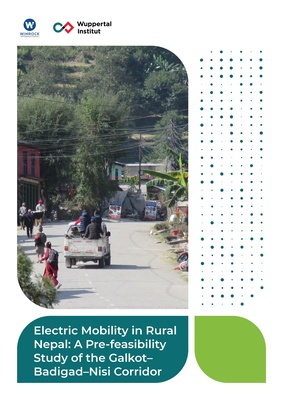
Pre-Feasibility Study on Electric Mobility in the Galkot-Badigad-Nisi Corridor
This study:
- xxxx