Case Studies Overview of the Nigeria Off-Grid Solar Knowledge Hub
From energypedia
The following case studies delve into the approaches taken by Nigerian practitioners in designing solar off-grid interventions. By clicking on the title or the image, you will be taken to the respective case study.
| LiteDey System Solution | Local Solutions Lab | Green Business Area |
|---|---|---|
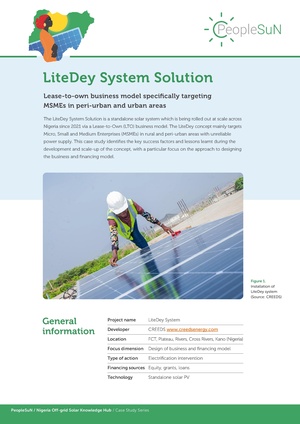
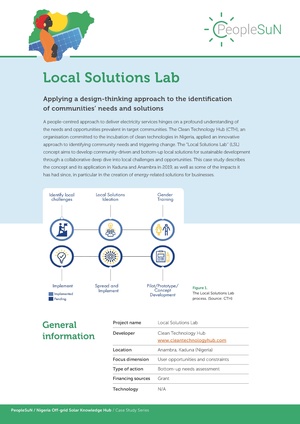
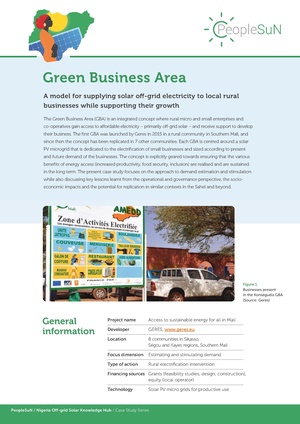
| This case study about LiteDey Standalone Solar Solution describes a lease-to-own business model developed by CREEDS, specifically targeting MSMEs in peri-urban and urban areas. | This case study describes the approach of a Local Solutions Lab developed by the Clean Technology Hub. They used a design-thinking approach to identify community needs and solutions. | This case study describes the Green Business Area, an approach to delivering solar off-grid electricity to local rural businesses while supporting their growth, developed by GERES. |
 |
 |
 |
| Gbamu Gbamu Mini Grid | Koolhome by Koolboks | Nasarawa Mini Grids by Husk | |
|---|---|---|---|
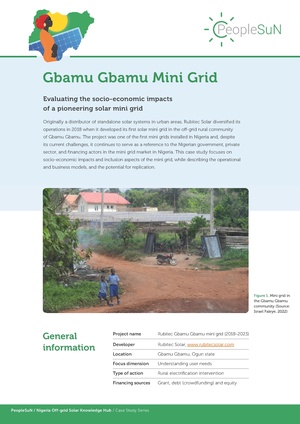
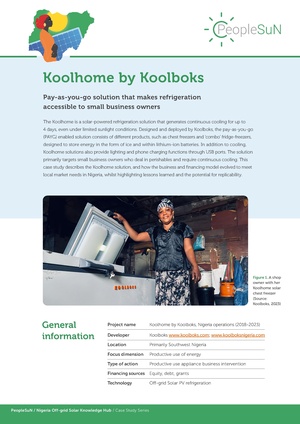
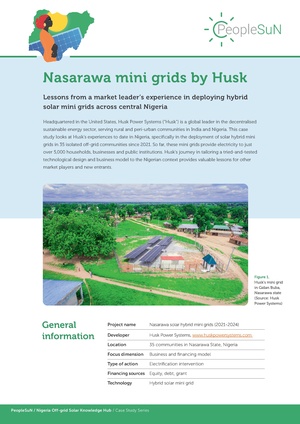
| This case study focuses on the socio-economic impacts and inclusion aspects of one of the first mini grids installed in the off-grid rural community Gbamu Gbamu in Nigeria. It also describes the operational and business models, and the potential for replication. | This case study describes the Koolhome pay-as-you-go enabled solar-powered refrigeration solution, and how the business and financing model evolved to meet local market needs in Nigeria. | This case study looks at Husk Power Systems experiences to date in Nigeria, specifically in the deployment of solar hybrid mini grids in 35 isolated off-grid communities since 2021. | |
 |
 |
 |
| Community-centric model for solar mini grids | Solar Sister Nigeria |
|---|---|
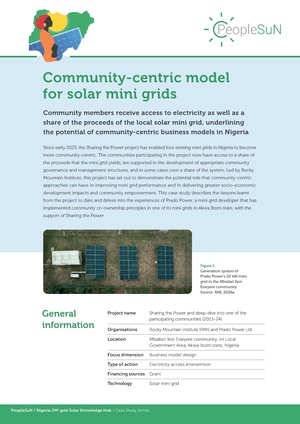
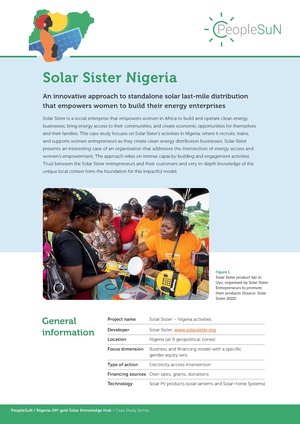
| This case study describes the lessons learnt from the Sharing the Power project to date and delves into the experiences of Prado Power, a mini grid developer that has implemented community co-ownership principles in one of its mini grids in Akwa Ibom state, with the support of Sharing the Power. | This case study focuses on Solar Sister’s activities in Nigeria, where it recruits, trains, and supports women entrepreneurs as they create clean energy distribution businesses. Solar Sister presents an interesting case of an organisation that addresses the intersection of energy access and women’s empowerment. |
 |
 |
These case studies were developed as part of the PeopleSuN project.